
Research area: Cellular redox metabolism and NAD-consuming enzymes
NAD+ (nicotinamide adenine dinucleotide) is not a peptide but a ubiquitous small-molecule dinucleotide coenzyme composed of nicotinamide and adenine bases linked through two ribose sugars and a pyrophosphate bridge. It is central to cellular redox biochemistry, cycling between its oxidized (NAD+) and reduced (NADH) states to shuttle electrons through glycolysis, the tricarboxylic-acid cycle, and oxidative phosphorylation. Beyond redox chemistry, NAD+ also serves as a consumed substrate for several enzyme families rather than acting catalytically. This buffered research-grade preparation is formulated for solution stability, and NAD+ is widely used as a foundational reference cofactor in metabolic, mitochondrial, and cellular-aging research across in-vitro and preclinical model systems.
In research models NAD+ functions both as an electron carrier in energy-yielding metabolic pathways and as a substrate for NAD-consuming enzymes. These include the sirtuin deacylases (SIRT1-7), which couple NAD+ hydrolysis to protein deacetylation; poly(ADP-ribose) polymerases (PARPs) involved in DNA-damage signaling; and CD38/CD157 glycohydrolases that generate calcium-mobilizing messengers. Studies manipulate NAD+ availability to probe how cellular redox balance and these enzyme activities influence mitochondrial function, gene regulation, and stress responses.
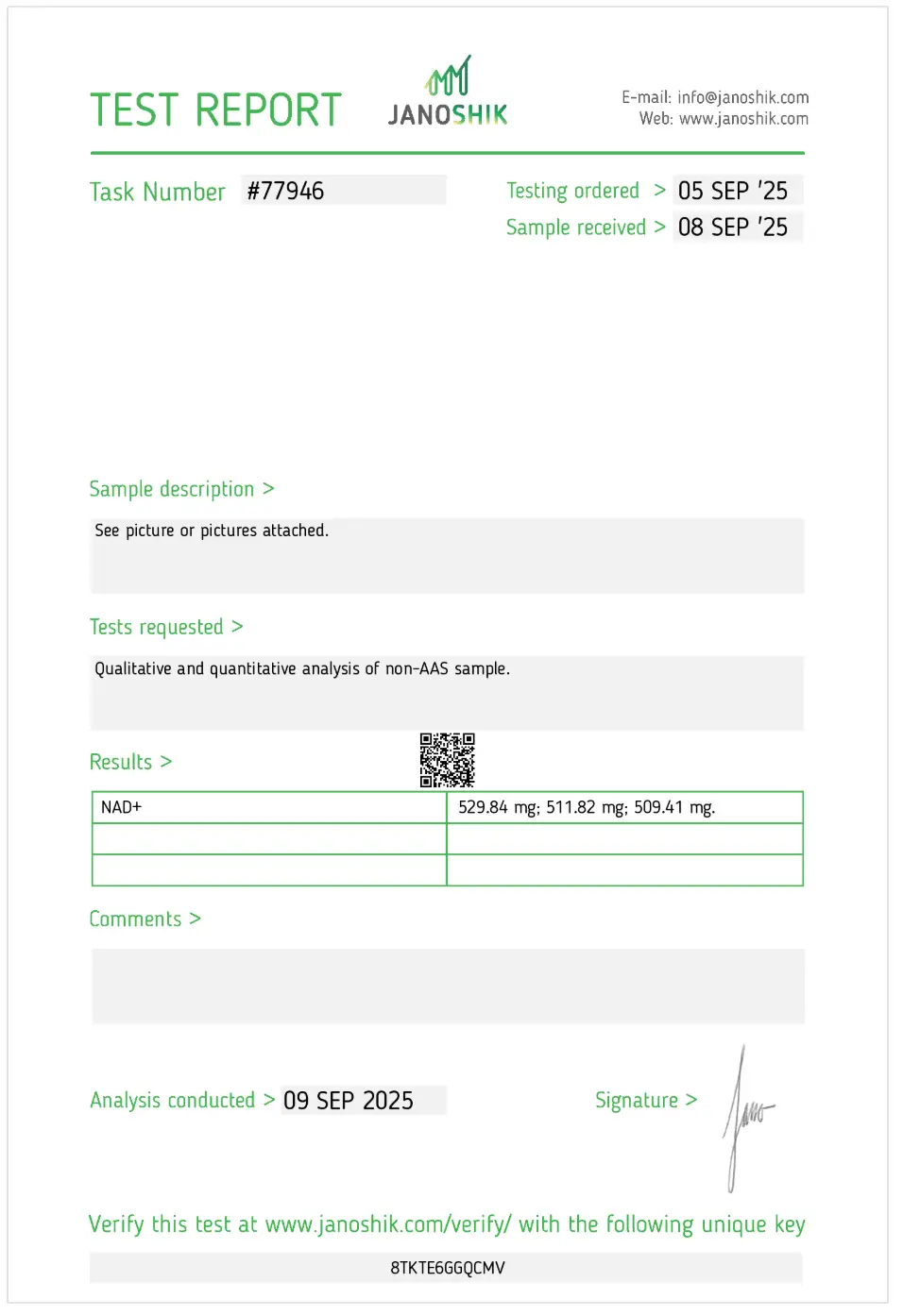
Every batch of Nad+ Buffered is independently third-party tested in the USA for identity and purity, with a Certificate of Analysis (COA) available on this product page.
Nad+ Buffered is for research use only. It is not intended for human or veterinary use and has not been evaluated by the FDA. By purchasing, the buyer represents and warrants that it will be used solely for in-vitro laboratory research.
| Size | 500mg Single Vial, 500mg (5 Pack), 500mg (10 Pack) |
|---|

Reviews
There are no reviews yet.